
Leather furniture adds comfort, elegance, and durability to a home. However, regular use exposes leather surfaces to dust, body oils, perspiration, food particles, and accidental spills. Without appropriate maintenance, these substances can affect the appearance and condition of the furniture.
Learning How to Clean Leather Furniture Properly starts with understanding the material. Aniline, semi-aniline, and pigmented leather have different surface characteristics and cleaning requirements. A method that works for a protected leather sofa may cause discoloration on untreated aniline leather.
This guide explains how to identify leather furniture, choose suitable cleaning supplies, remove everyday dirt, handle common stains, and maintain the material. It also covers cleaning mistakes and situations where professional assistance is the safer option.
Why Proper Leather Cleaning Matters
Leather is a natural material that responds to its environment and everyday use. Dust, body oils, perspiration, friction, and sunlight can gradually change its appearance.
Understanding How to Clean Leather Furniture Properly helps prevent unnecessary surface damage and supports a consistent maintenance routine. Regular care also makes it easier to identify spills and stains before they become difficult to manage.
How Dirt and Oils Affect Leather
Leather furniture comes into contact with skin, clothing, hair, and household dust every day. These interactions can leave behind oils, perspiration, and small particles.
Frequently touched areas, including armrests, headrests, and seat cushions, may accumulate more residue than other parts of the furniture.
When dirt remains in the leather’s surface texture and seams, it can make the material look dull or uneven. Some leather finishes are also more vulnerable to absorbed oils and stains.
Regular dust removal and appropriate cleaning help control this buildup.
Why Using the Wrong Cleaner Can Damage Leather
Leather cleaning products are not interchangeable. Household detergents, bleach, ammonia, solvents, and alcohol-based products may affect the color or protective finish of certain leather materials.
Excessive moisture can also cause problems, particularly with porous aniline leather. Depending on the material, it may produce dark patches, water marks, or uneven coloration.
Even products marketed specifically for leather are not automatically suitable for every finish. Always check the furniture manufacturer’s instructions and test an approved product in an inconspicuous area before using it.
What You Need Before Cleaning Leather Furniture
Preparing suitable supplies makes cleaning easier and helps reduce the risk of accidental damage. When considering How to Clean Leather Furniture Properly, remember that the correct supplies depend on the leather type and its manufacturer’s care instructions.
The following items may be useful for routine maintenance:
- Soft microfiber cloths: Suitable for removing dust and gently wiping compatible leather surfaces.
- Vacuum cleaner with a soft brush attachment: Helps remove loose dirt from seams, cushion gaps, and crevices.
- Leather-safe cleaner: Choose a cleaner specifically approved for the furniture’s leather finish.
- Leather conditioner: Use only when recommended for the particular material.
- Distilled water: May be appropriate for certain manufacturer-approved cleaning methods, but it is not necessary for every leather product.
Use clean, undyed or white clothes where possible. They make it easier to notice whether color transfers from the furniture during cleaning.
Avoid purchasing multiple cleaning products before identifying the leather. A simpler collection of compatible supplies is generally preferable to using several unnecessary treatments.
How to Identify Your Leather Furniture Before Cleaning
Identifying the leather finish is one of the most important steps in furniture maintenance. The answer to How to Clean Leather Furniture Properly depends partly on the material’s surface protection and absorbency.
Different leather types respond differently to moisture, cleaning products, and conditioning treatments.
Different Types of Leather
Three common categories of leather used in furniture are aniline, semi-aniline, and pigmented leather.
Aniline Leather: Aniline leather is colored using soluble dyes and has little or no protective surface coating. It retains much of the hide’s natural appearance, including variations in grain and natural markings. Its porous surface makes it more vulnerable to liquid absorption, staining, and discoloration.
Semi-Aniline Leather: Semi-aniline leather receives dye along with a relatively light protective surface finish. It generally provides more resistance to everyday dirt and stains than untreated aniline leather. However, it is usually less protected than fully pigmented leather.
Pigmented or Protected Leather: Pigmented leather has a colored surface coating that provides additional protection. It generally offers better resistance to everyday soiling and is commonly used in upholstered furniture.
Suede and nubuck are additional leather categories with different surface textures and maintenance requirements. They should not be cleaned using ordinary smooth-leather methods.
Why the Leather Type Matters
The amount of surface protection determines how leather responds to cleaning.
For example, a protected leather surface may tolerate a slightly damp cloth when the manufacturer permits it. An untreated aniline surface can absorb moisture more readily and develop visible marks.
Using an unsuitable cleaner may also affect the finish, texture, or color. Identifying the material before cleaning helps reduce the risk of accidental damage.
Checking the Manufacturer’s Care Instructions
Look for the furniture’s original care guide, product label, warranty information, or manufacturer’s website.
Check whether the manufacturer recommends dry dusting, a specific cleaning product, a particular cleaning technique, or a compatible conditioner.
Some furniture manufacturers recommend minimal intervention, while others provide detailed cleaning and conditioning procedures.
If the leather type is unknown, contact the manufacturer or a qualified leather-care specialist before applying cleaning products.
How to Clean Leather Furniture Step by Step
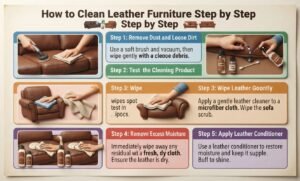
A careful cleaning routine can help maintain the furniture without unnecessarily affecting its surface. The best approach to How to Clean Leather Furniture Properly is to follow the manufacturer’s instructions rather than applying one general method to every sofa.
Step 1: Remove Dust and Loose Dirt
Begin by removing loose dust, crumbs, and debris. Use a clean, soft microfiber cloth to wipe the accessible surfaces. A vacuum cleaner with a soft brush attachment can help remove particles from seams and crevices.
If cushions are removable, clean the areas underneath them as well. Avoid rotating brush attachments and rough vacuum accessories that may scratch or scuff the leather.
Step 2: Test the Cleaning Product
If the manufacturer recommends a cleaning product, test it on a small, hidden area first. Follow the product’s application instructions and allow the test area to dry as directed.
Check for color changes, unwanted darkening, surface stickiness, changes in texture, or color transfer onto the cloth.
If you notice an unexpected change, stop using the product. A successful test is useful, but it does not replace the manufacturer’s cleaning instructions.
Step 3: Wipe the Leather Gently
For leather that permits wet cleaning, apply the approved cleaner to a soft cloth or applicator as directed. Work gently and avoid excessive pressure. Do not pour liquid directly onto the leather or allow it to collect in seams and creases.
Some manufacturers recommend cleaning an entire panel rather than treating only one small spot. This can help prevent uneven marks or visible cleaning rings.
Follow the specific instructions for your furniture rather than assuming that spot cleaning is always appropriate.
Step 4: Remove Excess Moisture
If the approved cleaning method involves moisture, use a clean cloth to remove excess liquid and residue as directed. Do not soak the leather.
Allow the furniture to dry naturally in a suitable, ventilated environment. Keep it away from direct sunlight, radiators, fireplaces, and other intense heat sources. Never use a hair dryer or heat gun to accelerate drying.
Step 5: Apply Leather Conditioner
Conditioning is not automatically required after every cleaning session. Some leather manufacturers recommend particular creams or protective treatments, while others advise avoiding cleaning and conditioning products on certain finishes.
If your furniture requires conditioning, select a product compatible with its leather type. Apply it according to the manufacturer’s instructions and avoid excessive quantities. Do not apply ordinary smooth-leather conditioners to suede or nubuck.
How to Clean Different Types of Leather Furniture
Leather finishes require different approaches because they do not have identical levels of surface protection. Knowing How to Clean Leather Furniture Properly for each finish helps prevent problems caused by unsuitable products and excessive moisture.
Cleaning Aniline Leather
Aniline leather has a relatively open, absorbent surface. This makes it more susceptible to stains, moisture marks, and discoloration.
For routine maintenance, remove dust using a soft, clean cloth or a suitable vacuum attachment.
If a liquid spills, gently blot it with a clean, absorbent, undyed cloth. Avoid rubbing, because friction can spread the liquid and affect the surface.
Do not automatically apply a general-purpose leather cleaner or household cleaning solution.
Manufacturer recommendations differ. For example, Carl Hansen & Søn recommends regular vacuuming and provides specific cleaning instructions for its aniline products, while other manufacturers may recommend avoiding cleaning products.
If a stain penetrates the leather or leaves a noticeable mark, consult a specialist familiar with aniline furniture.
Cleaning Semi-Aniline Leather
Semi-aniline leather has a light protective finish, but it remains more sensitive than many fully pigmented surfaces. Begin by removing dust with a soft cloth or vacuum attachment.
For minor soiling, use only the cleaning method approved by the manufacturer. Some manufacturers permit a well-wrung damp cloth, while others recommend specialized products.
Avoid saturating the surface or using strong household chemicals.
If the furniture requires conditioning, select a compatible product and follow the manufacturer’s maintenance schedule.
Cleaning Pigmented or Protected Leather
Pigmented leather generally has a protective surface coating that makes it more resistant to everyday dirt and moisture. Remove loose dust using a clean, soft cloth.
If the manufacturer permits it, use a slightly damp cloth for light surface dirt. For more noticeable soiling, apply an approved leather cleaner according to its instructions.
Avoid abrasive sponges, stiff brushes, and harsh chemicals that may damage the protective coating. Although pigmented leather is generally easier to maintain, it is not completely waterproof or stain-proof.
Read more: Decadgarden Yard Tips by Decoratoradvice: Lawn Care and Garden Maintenance Guide
How to Remove Common Stains From Leather Furniture
Different stains require different treatments. When researching How to Clean Leather Furniture Properly, it is important to distinguish between removing fresh spills and treating stains that have already penetrated the leather.
The safest first step for many fresh spills is to remove excess material without rubbing. However, the appropriate cleaning procedure depends on the leather finish and the type of stain.
Removing Food and Drink Stains
Remove solid food carefully without scraping the surface. For liquid spills, gently blot the excess using a clean, absorbent cloth. Avoid rubbing or spreading the liquid.
If the manufacturer permits additional cleaning, use the recommended product and follow its application instructions. Aniline leather may absorb liquid quickly, so a visible stain may require professional treatment.
Removing Grease and Oil Stains
Grease and oil can be difficult to remove because they may penetrate porous leather. Gently lift excess grease using a clean, dry, absorbent cloth. Do not rub the affected area or spread the oil. Follow the manufacturer’s stain-removal instructions for the particular leather finish.
Avoid experimenting with household detergents, solvents, or powders. These substances may leave residue or affect the surface. For persistent grease stains, professional treatment is a safer option.
Removing Ink Stains
Ink stains can be particularly challenging, especially on light-colored or untreated leather. Do not automatically use rubbing alcohol, nail polish remover, bleach, or other strong solvents.
Some manufacturer-approved procedures allow specific ink-removal products on protected leather, but these treatments are not suitable for every leather finish.
For liquid ink, deeply absorbed marks, or valuable furniture, contact the manufacturer or a professional leather cleaner before attempting treatment.
Removing Pet Stains
Pet accidents can leave moisture, discoloration, and unpleasant odors. Remove solid material carefully and blot excess liquid with a clean, absorbent cloth.
Do not use bleach, ammonia, disinfectants, or strongly scented household cleaners without manufacturer approval. For surface contamination, use only an appropriate leather-safe cleaning method.
If urine or other liquids penetrate the seams or cushion filling, surface cleaning may not remove the odor completely. A professional may need to assess the leather and internal upholstery materials.
What Not to Use When Cleaning Leather Furniture
Some household products and cleaning techniques can affect leather’s color, texture, or protective finish.
Unless specifically approved by the furniture manufacturer, avoid the following:
Harsh Household Cleaners: Bleach, ammonia-based products, strong detergents, and general-purpose sprays may damage certain leather finishes.
Excessive Water: Saturating leather can cause marks, uneven coloration, and other moisture-related problems.
Abrasive Sponges or Brushes: Rough cleaning materials may scratch the surface or remove protective coatings.
Unverified DIY Cleaning Solutions: Vinegar, baking soda, lemon juice, alcohol, and other homemade mixtures are not universally suitable for leather furniture.
Unapproved Conditioners and Oils: Products intended for shoes, saddles, or other leather goods may not be appropriate for upholstered furniture.
The safest approach is to use only products approved for the specific leather finish.
How Often Should You Clean Leather Furniture?
Cleaning frequency depends on usage, environmental conditions, the type of leather, and manufacturer recommendations. A practical maintenance routine includes the following:
Regular Dusting: Remove surface dust regularly using a soft cloth or suitable vacuum attachment. Weekly vacuuming is recommended in some furniture manufacturers’ care guides.
Routine Cleaning: Clean when necessary and according to the manufacturer’s instructions. Some care guides recommend periodic deeper cleaning, but the appropriate interval varies.
Conditioning Schedule: Follow the specific conditioning instructions for your furniture. Some manufacturers recommend quarterly protection, while others advise using care products sparingly or avoiding them entirely.
Knowing How to Clean Leather Furniture Properly also means understanding when cleaning is unnecessary. Frequent treatment with unsuitable products can create additional problems rather than improve the furniture’s condition.
Tips for Keeping Leather Furniture Clean and Looking New
Preventive maintenance can reduce the need for intensive cleaning and help preserve the appearance of leather furniture.
Keep Furniture Away From Direct Sunlight
Prolonged exposure to sunlight can contribute to fading and changes in the leather’s surface condition.
Position furniture away from direct sunlight when possible. Window coverings can help reduce exposure.
Deal With Spills Quickly
Promptly remove excess liquid using a clean, absorbent cloth. Blot gently rather than rubbing the spill into the surface. Follow the appropriate cleaning instructions for the leather finish.
Avoid Placing Sharp or Rough Objects on the Leather
Sharp objects, pet claws, rough clothing, and metal fastenings may scratch or damage leather. Take particular care with light-colored furniture because dye transfer from clothing can cause difficult-to-remove marks.
Maintain Appropriate Room Conditions
Avoid placing leather furniture directly beside fireplaces, radiators, heaters, or other intense heat sources.
Keep the furniture in a reasonably stable indoor environment and avoid prolonged exposure to excessive heat and sunlight. These simple precautions can help reduce environmental damage.
Common Leather Furniture Cleaning Mistakes to Avoid
Avoiding common mistakes is just as important as selecting the right cleaning products.
- Skipping leather identification: Different finishes have different cleaning requirements.
- Using an unapproved cleaner: A product suitable for one sofa may damage another.
- Applying too much moisture: Excess liquid can affect porous leather.
- Scrubbing aggressively: Excessive friction may damage the surface finish.
- Conditioning too frequently: Some leather products can develop residue or unwanted color changes from excessive treatment.
- Ignoring spills: Delayed treatment may allow stains to penetrate the leather.
- Using the same stain-removal method for every spill: Ink, grease, and liquid spills need different approaches.
- Applying direct heat: Heaters and hair dryers can cause additional drying and surface damage.
Always prioritize the furniture manufacturer’s instructions over generic cleaning advice.
When Should You Call a Professional Leather Cleaner?
Professional assistance may be necessary when home maintenance cannot safely resolve a cleaning problem.
Consider contacting a qualified leather-care specialist if:
- Ink or dye stains remain on the surface.
- Grease or oil has penetrated the leather.
- Large water marks or discoloration have developed.
- Aniline leather has absorbed a significant spill.
- The surface has become sticky, cracked, or damaged.
- A cleaning product has changed the leather’s color or texture.
- Pet odors have penetrated the cushion filling.
- You cannot identify the leather finish or suitable cleaning method.
Choose a professional with experience in leather furniture rather than relying on a general upholstery cleaner without checking their qualifications. Ask about their experience with your particular leather type and the products they intend to use.
Final Thoughts
Learning How to Clean Leather Furniture Properly involves more than choosing a cleaning product and wiping the surface. It requires understanding the leather finish, following appropriate maintenance instructions, and avoiding treatments that may damage the material.
Regular dusting, prompt attention to spills, protection from excessive sunlight, and suitable cleaning products can help maintain leather furniture over time.
Remember that aniline, semi-aniline, and pigmented leather do not have identical cleaning requirements. Conditioning is also not necessary for every leather product.
When uncertain, consult the furniture manufacturer or a qualified leather-care professional before attempting a treatment. Careful maintenance is the most reliable way to preserve the appearance and condition of leather furniture.
FAQs About How to Clean Leather Furniture Properly
1. What is the safest way to clean leather furniture?
The safest way to learn How to Clean Leather Furniture Properly is to identify the leather finish, follow the manufacturer’s instructions, remove loose dust with a soft cloth or suitable vacuum attachment, and use only approved cleaning products when necessary.
2. Can I clean leather furniture with water?
Some leather finishes permit carefully controlled damp cleaning. However, untreated aniline leather is more absorbent and may develop water marks. Check the manufacturer’s instructions before using water.
3. Can I use dish soap to clean a leather sofa?
Do not assume ordinary dish soap is suitable for leather. Some manufacturers approve particular soap-flake solutions, but household detergents are not universally recommended.
4. How do I remove stains from leather furniture?
Blot fresh spills gently using a clean, absorbent cloth. Then follow the stain-removal instructions for your leather type. Difficult or deeply absorbed stains may require professional treatment.
5. Should I condition leather furniture after every cleaning?
No. Conditioning requirements vary according to the leather finish and manufacturer. Use a compatible conditioner only when recommended.
6. Can vinegar damage leather furniture?
Vinegar is acidic and is not a universally approved leather cleaner. It may affect certain finishes or cause discoloration. Do not use it without manufacturer approval.
7. How often should I clean my leather sofa?
Dust regularly and perform deeper cleaning according to the furniture’s maintenance instructions. Cleaning frequency depends on usage, the leather finish, and the surrounding environment.
8. Can I use a vacuum cleaner on leather furniture?
Yes, a vacuum cleaner with a suitable soft brush attachment can remove dust and loose dirt from many leather surfaces. Avoid rotating brush rolls and rough attachments.
9. What should I do if my leather sofa gets wet?
Gently blot excess liquid with a clean, absorbent cloth. Avoid rubbing or applying direct heat. Follow the manufacturer’s drying instructions and seek professional help if discoloration develops.
10. Is professional leather cleaning necessary?
Not always. Routine dust removal and manufacturer-approved maintenance can usually be performed at home. Deep stains, significant discoloration, and damaged or unidentified leather may require professional attention.